How many miles can a single piece of rubber actually give you before it has nothing left to offer? Not the tread, which wears and gets replaced, but the casing underneath it — the structural body of belts, plies, and bead wire that everything else is built around. Follow one casing from the moment it is born, and the number turns out to be far larger than most drivers assume.
Follow the casing off the factory line and onto its first rig
The story begins with layers. Steel belts are wound, rubber is calendered onto fabric, the bead bundles are set, and the whole green assembly is dropped into a mold where heat and pressure cure it into a single bonded unit. What comes off the line is not really a tire in the way a driver thinks of one — it is a casing with its first tread molded on top. Each one carries a date stamp and a serial code pressed into the sidewall, a kind of birth certificate that will follow it for the rest of its working years.
Our casing gets crated, shipped, and mounted on the steer position of a long-haul tractor pulling freight across a region where the highways run long and the winters bite. From its first revolution it is doing one of the hardest jobs in trucking: carrying the front weight of the truck while steering it, with no second tire beside it to share the load.
Clock the first hundred thousand miles in steer service
Steer tires wear slowly but watch everything. Over that first stretch of highway life the casing flexes millions of times, heats up on summer asphalt, cools overnight, and absorbs every pothole and expansion joint the road offers. Properly inflated and regularly rotated, it holds its shape beautifully. The tread, meanwhile, grinds down at the shoulders and ribs where the steering forces concentrate.
By the time the tread approaches its legal and practical limit, the casing itself may be in excellent condition. This is the moment that decides whether a tire has a short life or a long one. A fleet that treats the worn steer tire as garbage throws away the most valuable part. A fleet that understands the casing sees an asset that has barely started.
Pull it for inspection and send it to be retreaded
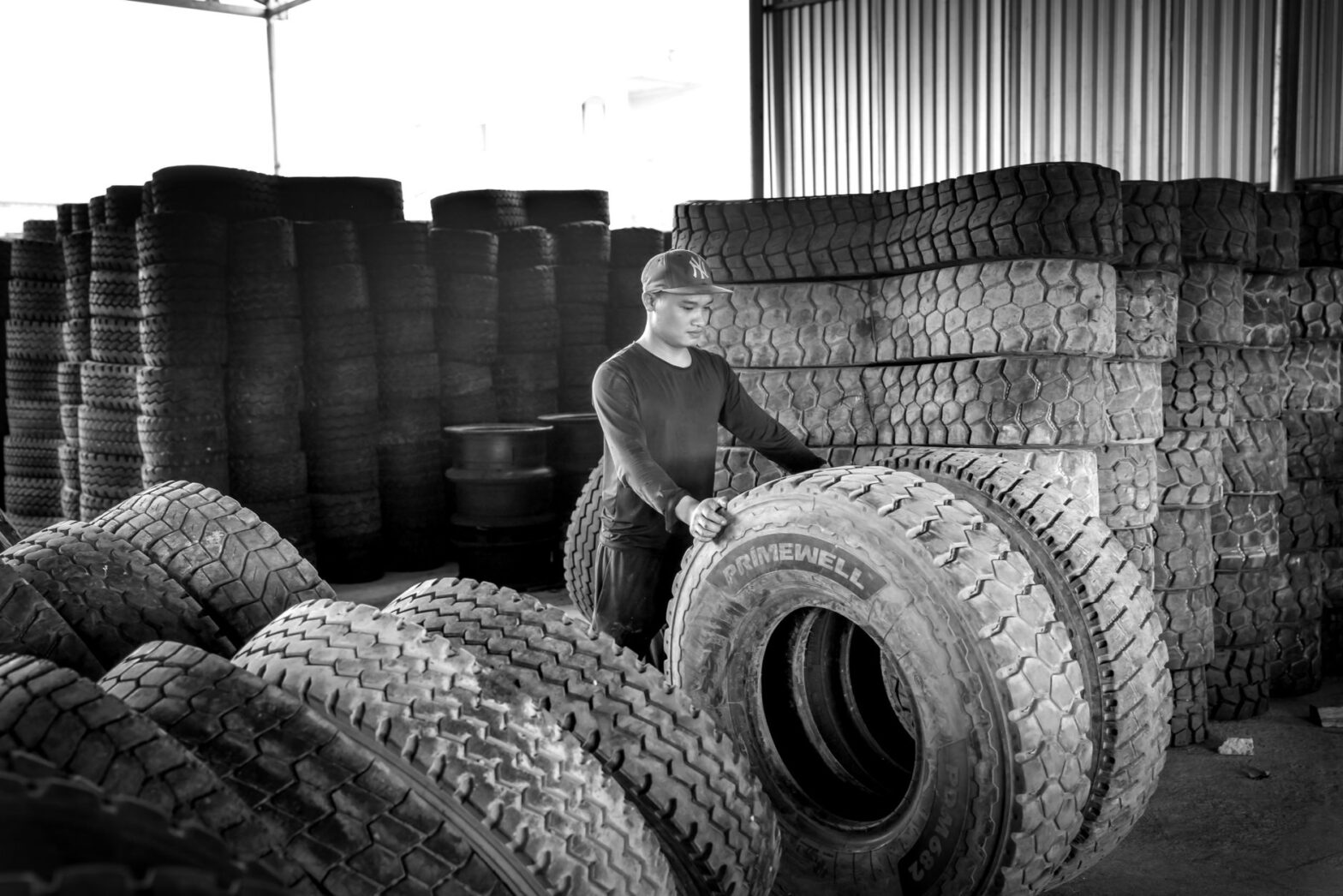
The tire comes off, gets tagged, and goes to a retread shop for the real test. Technicians inspect the casing inside and out, often with shearography that reveals separations invisible to the eye. They check the bead area, probe for nail holes and trapped moisture, and read the age stamp. A casing that passes gets its old tread buffed away down to a clean, uniform surface.
From there a fresh tread is bonded on and cured, and the casing is reborn with new rubber and the same proven body underneath. Shops that handle this work well — the kind you would find at a dedicated service point such as the succursale de Saint-Léonard — keep detailed records tying each retread back to that original serial code, so the casing’s history travels with it. A sound casing can typically take two or three retread cycles, and premium casings sometimes more.
Move it back to a drive axle for a second working life
This time the casing goes onto a drive axle, paired with a sibling and fitted with an aggressive, traction-oriented tread pattern suited to pulling loaded trailers up grades and through slush. The work is different — more torque, more scrub, more bite into the road — but the casing handles it, because it was engineered to be retreadable from the start.
It racks up another long run of miles here, wears its second tread down, and may come back for inspection again. Each cycle stretches the cost of that original casing across more and more miles, which is the entire economic point of building a tire worth retreading.
Retire the casing and account for everything it gave you
Eventually the inspection turns up something that ends it: a belt separation, a ply crack from age, water damage that spread through the body. The casing is rejected, and this time there is no new tread in its future. It heads to a recycler, where it may become crumb rubber for pavement, fuel for a kiln, or material for molded products.
Add up its life and the arithmetic is striking — one casing, several treads, often well over half a million miles of service from a single piece of rubber cast on a factory line years earlier. The practical takeaway is simple: next time a worn tire comes off your truck, don’t scrap it on sight — have the casing inspected first and let its real condition decide its fate.